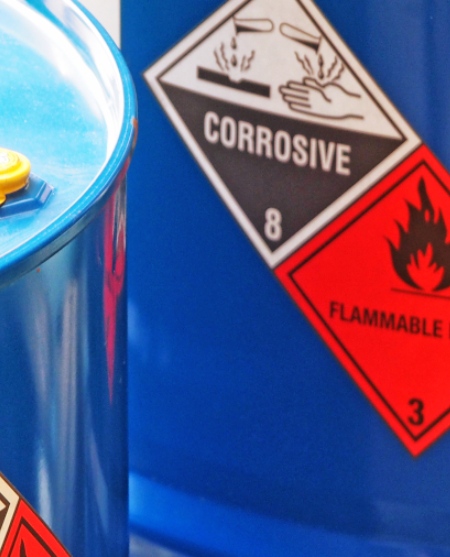

Safe handling of goods classed as dangerous
is another service offered by SIA Cargo.
The transport of such items is regulated, and these articles
or substances are deemed safe for transportation by air, if
they meet the requirements specified in the current edition
of the IATA Dangerous Goods Regulations. These regulations
specify how the articles must be packed, marked, labelled
and documented
The carriage of any live animal by air must comply with the
current edition of the IATA Live Animals Regulations. These
regulations specify the design elements of the containers
for the animals, documentation, labelling and handling recommendations.
The following are some common items classified as dangerous
goods. Such items must always be uplifted as cargo and not
as baggage or in postal mail:
Fireworks: Signal flares, Sparklers or other
explosives.
Flammable Liquid or Solids: Fuel, Paints,
Lighter refills, Matches.
Household items: Drain cleaners and solvents.
Pressure containers: Spray cans, Butane fuel,
Scuba tanks, propane tanks, Carbon Dioxide cartridges, and
self-inflating rafts.
Weapons: Firearms, Ammunition, Gunpowder,
Mace, Tear gas or Pepper spray
Other hazardous materials: Dry ice, Gasoline-powered
tools, Wet-cell Batteries, Camping equipment with fuel, Radioactive
materials, Poisons, Infectious Substances.
This list is not exhaustive. There are many other items that
can be classified as Dangerous Goods when transported by air.
We have teams of highly trained licensed staff to ensure that
the acceptance, loading and handling of dangerous goods complies
with established international regulations. This high level
of expertise ensures that we never put our cargo, passengers,
crew and the environment at risk.
Things you need to do for your Dangerous Goods consignment:
You must comply fully with the IATA Dangerous Goods Regulations
when transporting items.
You must ensure that the articles or substances are not prohibited
for transportation by air.
You are responsible for identifying and classifying all dangerous
goods, which includes packing, marking, labelling and documentation
in compliance with the regulations.
You must complete a Shippers Declaration for Dangerous
Goods and an air waybill must be completed for each consignment
of dangerous goods.
Advance arrangements are required.
For comprehensive details on the classification of dangerous
goods, and any restrictions, please refer to IATA Dangerous
Goods Regulations. Any local freight forwarder can also provide
assistance.
For more information, please contact your local SIA
Cargo office.